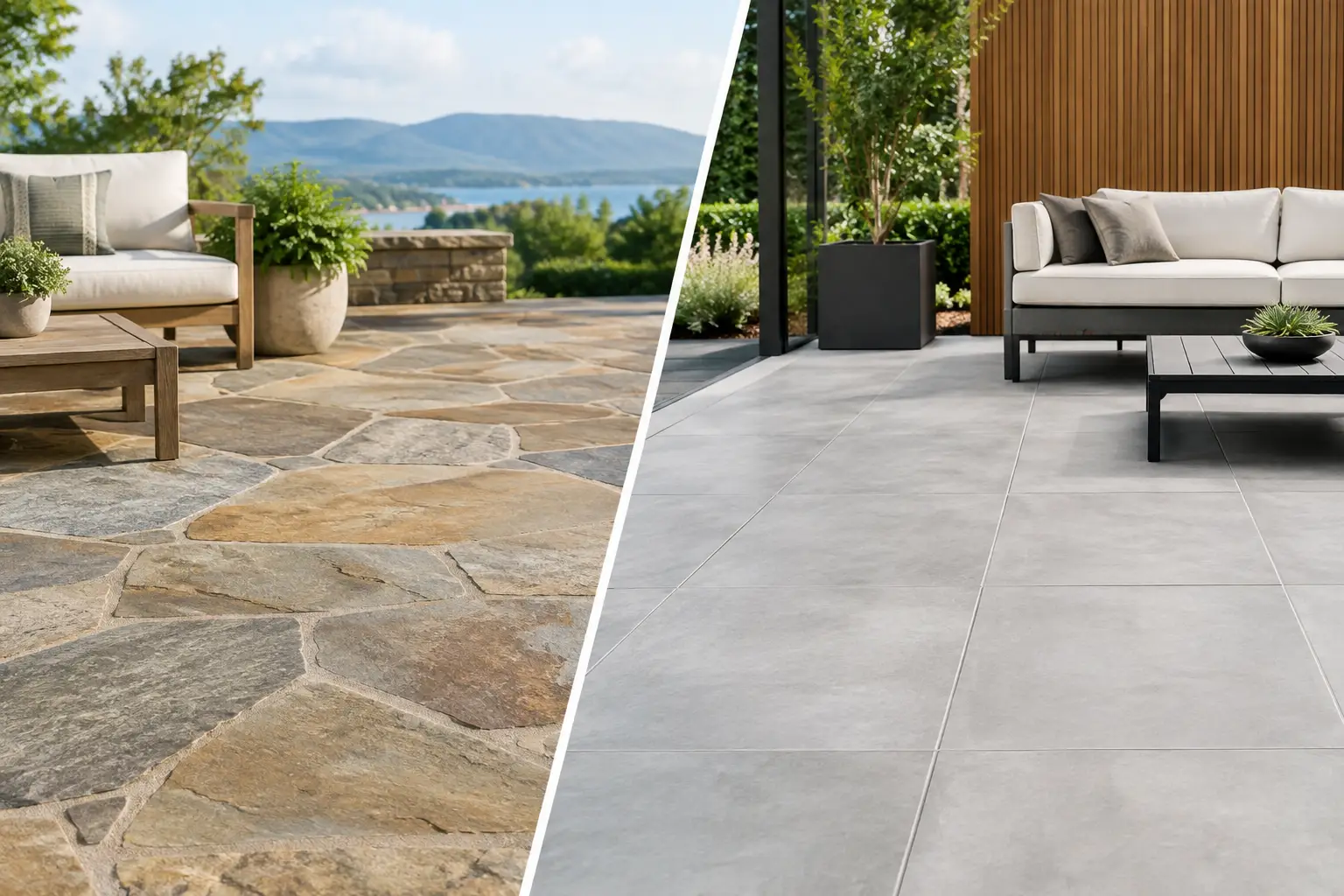
A patio can set the entire mood of a backyard. It is the surface beneath bare feet after a swim, the foundation for long dinners outdoors, and the visual thread that connects a pool, fire feature, kitchen, and landscape. When homeowners weigh natural stone versus porcelain, the right answer is rarely about which material is universally better. It is about which one brings the intended experience to life.
For a refined outdoor environment, both materials can perform beautifully. The difference lies in how they look up close, respond to sun and water, age over time, and support the way your family plans to gather outside.
Natural Stone Versus Porcelain: The Essential Difference
Natural stone is quarried from the earth, then cut or shaped into usable pieces for patios, walkways, pool surrounds, and walls. Travertine, limestone, sandstone, bluestone, and flagstone each have distinct colors, textures, and performance characteristics. No two pieces are identical, which gives a stone patio its depth and sense of permanence.
Porcelain pavers are manufactured from dense clay materials fired at extremely high temperatures. They are designed for exterior use and are available in a wide range of colors, sizes, and finishes, including convincing interpretations of limestone, travertine, marble, wood, and concrete. Their appearance is highly controlled, which appeals to homeowners who want clean lines and visual consistency.
Neither choice should be made from a small sample alone. A material that looks exceptional on a showroom board can feel very different once it stretches across a sun-filled pool terrace or wraps around an outdoor kitchen. Scale, light, architecture, drainage, and surrounding landscape all matter.
Why Natural Stone Creates a One-of-a-Kind Setting
Natural stone has a character that manufactured materials can imitate but not fully duplicate. Its veining, fossils, variation, and subtle shifts in tone make an outdoor space feel established rather than installed. In a luxury landscape, those details can be the difference between a pleasant patio and a destination-worthy retreat.
Travertine remains a popular choice for Sunbelt pool decks because it is often comfortable underfoot in direct sun and naturally textured. Certain limestones can create a quieter, more tailored look, especially around a pavilion, fireplace, or formal garden. Flagstone and sandstone can bring warmth and relaxed movement to a garden path or a more organic entertaining area.
The beauty of variation
Stone is especially compelling when the project calls for a layered, custom feel. A warm-toned travertine deck may complement a pale stucco home and turquoise pool water, while blue-gray natural stone can anchor a contemporary backyard with black metal details and lush planting.
That variation does require intentional design. Stone selections can vary by quarry lot, and individual pavers may show differences in shade, pattern, or texture. In the hands of a thoughtful designer and skilled installation team, this is a feature, not a flaw. The material is dry-laid and blended to create a balanced composition rather than a patchwork appearance.
What to expect from maintenance
Natural stone needs a little more attention than porcelain. Depending on the type of stone and its use, periodic sealing may help resist staining, simplify cleaning, and preserve the surface. Outdoor kitchens deserve special consideration, since cooking oils, wine, citrus, and grease can mark some stones if spills are left untreated.
Stone can also weather over time. For many homeowners, that soft patina is part of the appeal. A patio that develops character through seasons of pool parties, holiday gatherings, and quiet mornings can feel more personal with age. If you prefer a surface that looks nearly the same year after year, porcelain may better match your expectations.
Why Porcelain Appeals to Modern Outdoor Living
Porcelain brings control, consistency, and impressive practicality to a high-end exterior project. It is dense, nonporous, and highly resistant to staining, fading, moisture, and everyday outdoor messes. For homeowners who want a tailored look with minimal maintenance, it is a compelling option.
Large-format porcelain pavers can make a patio feel especially expansive. Fewer grout joints and crisp, rectilinear lines suit contemporary architecture, linear pools, and outdoor kitchens with sleek cabinetry. A stone-look porcelain can provide the visual direction of natural limestone or marble while keeping the surface more uniform.
A strong choice around water and food
Porcelain is particularly practical near pools, grills, and dining areas. It does not require sealing in the way many natural stones do, and cleanup is generally straightforward. Quality outdoor porcelain pavers are available in textured finishes that provide good traction when wet, making them well suited to active poolside spaces.
Heat performance still deserves a real conversation. Porcelain can become warm in strong sun, particularly in darker colors. Surface temperature is influenced by color, finish, local climate, sun exposure, and the amount of surrounding hardscape. A light-colored porcelain with an appropriate outdoor finish may perform very well, but it should be evaluated for the specific setting rather than assumed to feel cool.
The trade-off behind consistency
Porcelain’s polished predictability is also its limitation for some homeowners. Even premium stone-look porcelain repeats patterns, and a large installation may reveal that repetition if material selection and layout are not handled carefully. It also lacks the natural depth, irregular edges, and geological history that give genuine stone its unmistakable presence.
That does not make porcelain less luxurious. It simply creates a different kind of luxury: precise, architectural, clean, and composed.
How Climate, Use, and Design Should Guide the Choice
The most successful material selection begins with how the backyard will be used. A couple building a serene courtyard may prioritize the quiet richness of limestone. A busy family with children, pets, pool traffic, and frequent outdoor meals may value porcelain’s low-maintenance performance. A large estate patio may use both, pairing natural stone coping or wall caps with porcelain pavers in a dining zone.
In warm climates, comfort underfoot is a major consideration. Light colors usually help reflect heat, regardless of material. Shade structures, mature trees, umbrellas, and the placement of a pool also shape how a patio feels during the hottest part of the day. The surface choice should be part of a complete site plan, not an isolated decision.
Drainage is equally important. Water should move away from the home and gathering areas while preserving a graceful, uncluttered design. The right base preparation, slope, edge restraint, and joint treatment are just as important as the paver itself. Even the finest stone or porcelain cannot compensate for poor installation.
Where Each Material Works Best
Natural stone is often the right fit when a project calls for organic warmth, timeless character, and a surface that feels tied to the landscape. It excels in classic pool settings, garden paths, fire pit terraces, estate-style patios, and spaces where every material is intended to feel substantial and enduring.
Porcelain is often ideal for contemporary patios, streamlined pool decks, outdoor dining areas, and kitchens where easy care is a high priority. Its range of formats and finishes also makes it useful when a design needs to coordinate closely with interior flooring, architectural cladding, or a modern home palette.
The best projects do not force one material everywhere. A porcelain terrace may meet a natural stone fireplace hearth. A travertine pool deck may transition to a porcelain outdoor kitchen floor where food preparation and cleanup take center stage. Thoughtful combinations can create contrast without losing cohesion.
A Better Way to Choose Your Patio Surface
Before selecting color or pattern, stand in the places where outdoor life will happen. Picture wet feet moving from the pool to the lounge chairs. Think about the dinner party that stretches past sunset, the pizza oven gathering, and the quiet morning coffee before the rest of the house wakes up. Then consider how much variation you want to see, how much maintenance you are comfortable with, and whether the architecture calls for softened natural texture or crisp modern order.
Request full-size samples whenever possible, and view them outdoors at different times of day. Water the samples to see how color shifts when wet. Walk on them in direct sun. Place them beside proposed cabinetry, coping, wall finishes, and landscape materials. These small steps prevent a decision based solely on a beautifully lit indoor sample.
At Beyond Backyard Living, material choices are considered within the full composition of the space, from circulation and drainage to pool water, firelight, planting, and architecture. The goal is not simply to choose a patio surface. It is to create the setting for the life you want to enjoy outside.
Your backyard should feel as good underfoot as it looks from the doorway. Choose the material that supports the way you gather, relax, and make every season at home feel a little more extraordinary.