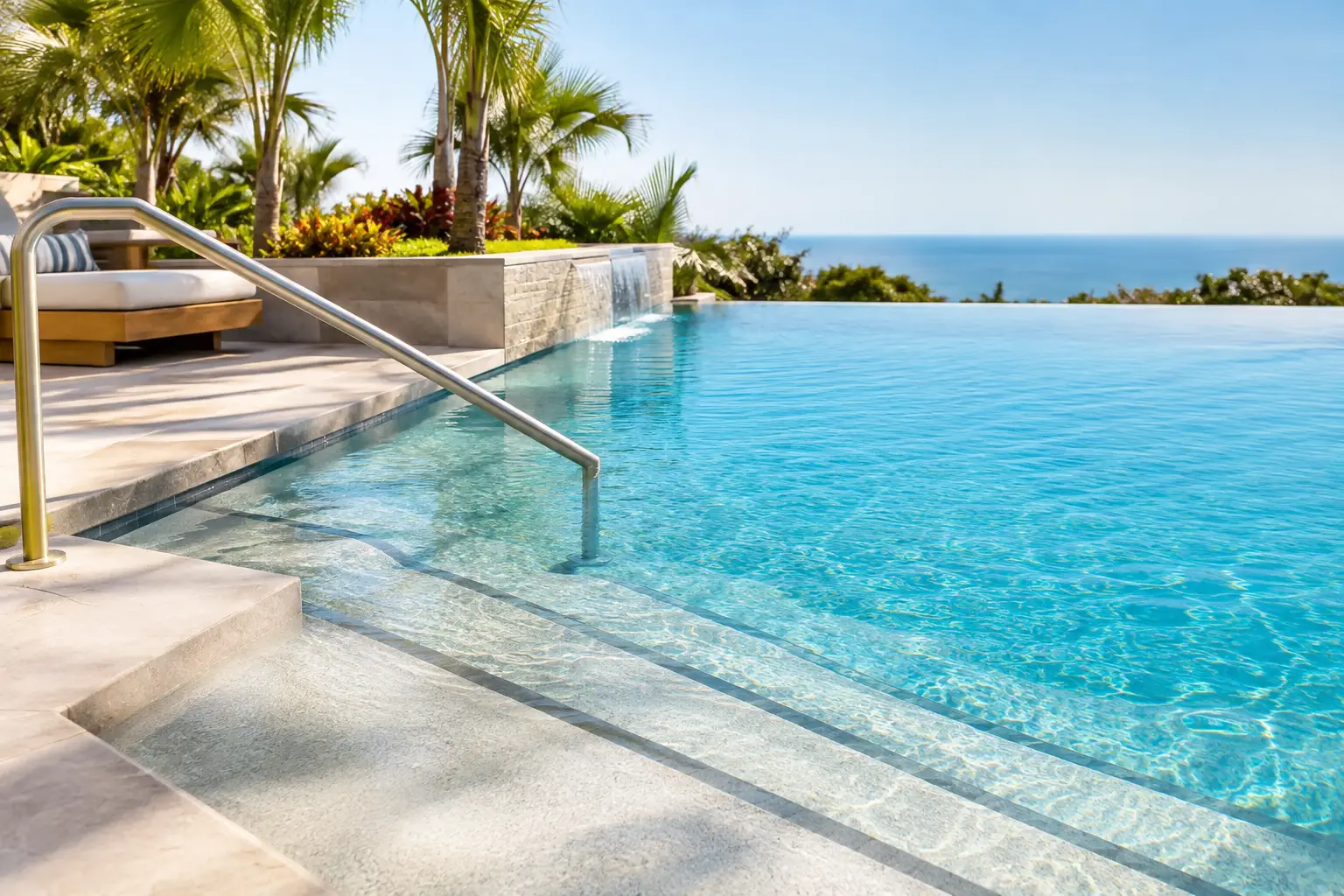
The moment someone steps into the water sets the tone for the entire pool experience. Knowing how to design pool entries means looking beyond a simple way in and out. The right entry can make a pool feel like a private resort, create a natural gathering place for family, and give the water’s edge the tailored character that separates a custom outdoor environment from a standard backyard pool.
A pool entry should feel intuitive underfoot, beautiful from every viewing angle, and aligned with the way your family plans to relax, play, and entertain. That requires thinking about circulation, sun exposure, deck space, water depth, and the architectural language of the larger backyard.
Start With the Way You Want to Use the Pool
The best pool entry is not chosen from a catalog in isolation. It grows from the lifestyle planned around the pool. A couple creating a calm retreat may prefer broad, elegant steps that gently lead into a quiet swimming area. A family with young children may get more value from a shallow tanning ledge that allows adults to sit in the water while little ones splash nearby. Homeowners who love hosting may want an entry that keeps guests from bottlenecking in one corner of the deck.
Consider where people will come from before they enter the pool. If guests will move from an outdoor kitchen or covered pavilion toward the water, the entry should be visible and easy to reach from that primary path. If the pool sits beyond a patio lounge, a wide step entry can create an inviting visual destination at the end of the view.
Also consider who will use the space over time. Children grow, parents and grandparents visit, and entertaining habits change. A design that includes both a graceful main entry and a practical handhold or secondary exit can preserve comfort without compromising the clean, custom look of the pool.
Choose an Entry Style That Fits the Design
Wide Entry Steps
Wide, shallow steps are a natural choice for refined, resort-style pools. They create a generous transition into the water and can span much of one end or side of the pool, making the water feel approachable rather than formal. Finished in a complementary tile or accented with a contrasting coping line, broad steps become a design feature in their own right.
This approach works especially well when the pool is intended for entertaining. Several people can enter at once, and the steps can double as a place to sit with a drink or keep an eye on children. The trade-off is that wide steps take up more swimming area, so their proportions should be balanced against the overall pool size.
Corner Steps
Corner entries are efficient and visually quiet. Tucked into one end of the pool, they preserve a longer open lane for swimming and maintain a crisp geometric shape. This makes them a strong option for sleek rectangular pools, especially when the surrounding patio is designed around clean lines and purposeful sightlines.
A corner entry can still feel generous when it is detailed well. Thoughtful step widths, subtle tile contrast, and nearby loungers or planters can turn a compact access point into an intentional part of the outdoor composition.
Roman-End or Curved Steps
Curved steps soften a pool’s geometry and bring a more traditional, romantic quality to the water. They pair beautifully with freeform pools, natural stone patios, lush planting, and garden-inspired outdoor spaces. A rounded entry can also create an inviting social edge where guests naturally gather.
The key is restraint. Curves should echo other elements in the landscape, such as a rounded fire pit terrace, a sweeping retaining wall, or soft planting beds. When curves appear only at the pool entry and nowhere else, they can feel disconnected from the larger design.
Beach Entries
A beach entry, sometimes called a zero-entry pool, slopes gradually from deck level into the water. It creates an unmistakable resort feel and is particularly appealing for multigenerational households. There is no first step to find, which can make entry more comfortable for young children, older visitors, and anyone who prefers a gentler transition.
Beach entries demand more room than standard steps, and they need careful planning for drainage, finish materials, and nearby deck circulation. In the right setting, however, they create a striking visual connection between patio and pool. Add in-water loungers, umbrellas, or sculptural bubblers, and the shallow edge becomes an experience rather than simply an entrance.
Tanning Ledges With Steps
A tanning ledge is a broad shallow shelf, typically large enough for lounge chairs, seated adults, or supervised play. Some designs place it at the main entry, with steps descending from the ledge into deeper water. Others locate it off to the side so it functions as a separate relaxation zone.
For homeowners who picture slow afternoons by the water, this is one of the most versatile choices. It is not the best substitute for a true swimming area, though. The ledge should be sized to support the furniture and activities you want without crowding the deeper portion of the pool.
Plan the Entry Around the Deck, Not Just the Water
Pool entries work best when the surrounding hardscape gives them room to breathe. A beautiful set of steps loses impact if it opens directly into a narrow walkway, a furniture cluster, or a congested grill area. Think of the deck as the arrival space for the water.
Leave enough clear room for people to dry off, pass behind seated guests, and move safely between the pool and the rest of the backyard. The entry should not compete with the route to the outdoor kitchen, fire feature, or indoor door. In a well-composed landscape, each space has a distinct purpose, yet the transitions feel effortless.
Material selection matters here, too. Pool coping, pavers, porcelain, natural stone, and textured concrete can all create a beautiful setting, but the finish must be appropriate for wet bare feet and intense Sunbelt heat. A surface that looks dramatic in a showroom may become uncomfortable in direct afternoon sun. Lighter tones often stay cooler, while textured finishes can provide better traction. The ideal choice depends on the project’s exposure, palette, and maintenance expectations.
Build Safety Into the Beauty
Luxury is comfort without compromise. A well-designed entry supports confident movement in and around the water, especially when the pool is active with children, friends, and visiting family.
Step dimensions should feel consistent and easy to read underwater. Contrasting tile bands or a carefully chosen interior finish can make the edge of each tread more visible without interrupting the pool’s visual calm. Handrails are another decision that deserves early attention. Some homeowners prefer to minimize visible metal, while others value the reassurance of a rail at the primary entry. There are discreet placement options that preserve the design while improving accessibility.
Lighting is equally valuable. Underwater lights near steps and ledges make evening swims safer and give the pool a warm, layered glow after sunset. Avoid treating lighting as an afterthought. When it is coordinated with landscape lighting, fire features, and architectural illumination, the entire backyard feels more polished at night.
Use Details to Make the Entry Feel Custom
The difference between a standard pool entry and an exceptional one often comes down to finishing details. Waterline tile can frame steps with a clean edge or blend them softly into the interior. Mosaic accents can introduce color and movement, while large-format porcelain or stone-look finishes may suit a more contemporary setting.
Consider the view from inside the home as well. If the entry faces a wall of glass doors, it becomes a focal point every day, not just when someone is swimming. That may call for symmetrical steps, a centered ledge, or a striking tile treatment. If the entry sits near a waterfall, spa spillway, or row of sheer descents, the forms should work together rather than compete for attention.
Small functional details deserve the same care. A shallow perch for getting in and out, a nearby towel landing zone, or a low wall that helps define circulation can make the space more hospitable. These choices create the feeling that every part of the backyard was designed for real life.
Design the Entry as Part of a Complete Escape
A pool is rarely the only reason homeowners invest in a backyard transformation. The most memorable spaces connect the water to places for conversation, cooking, shade, and celebration. Your pool entry should help orchestrate that experience, directing movement naturally from a covered patio to the water, from the water to a fire feature, and from an outdoor kitchen to a table where dinner lingers long after sunset.
At Beyond Backyard Living, that broader perspective is central to custom design. Rather than selecting an entry as a final pool detail, it can be shaped alongside the patio, planting, lighting, and gathering spaces that will give your backyard its personality.
The right entry does more than lead into the pool. It invites people to slow down, step into the water with confidence, and stay a little longer in the outdoor space you created for the people who matter most.