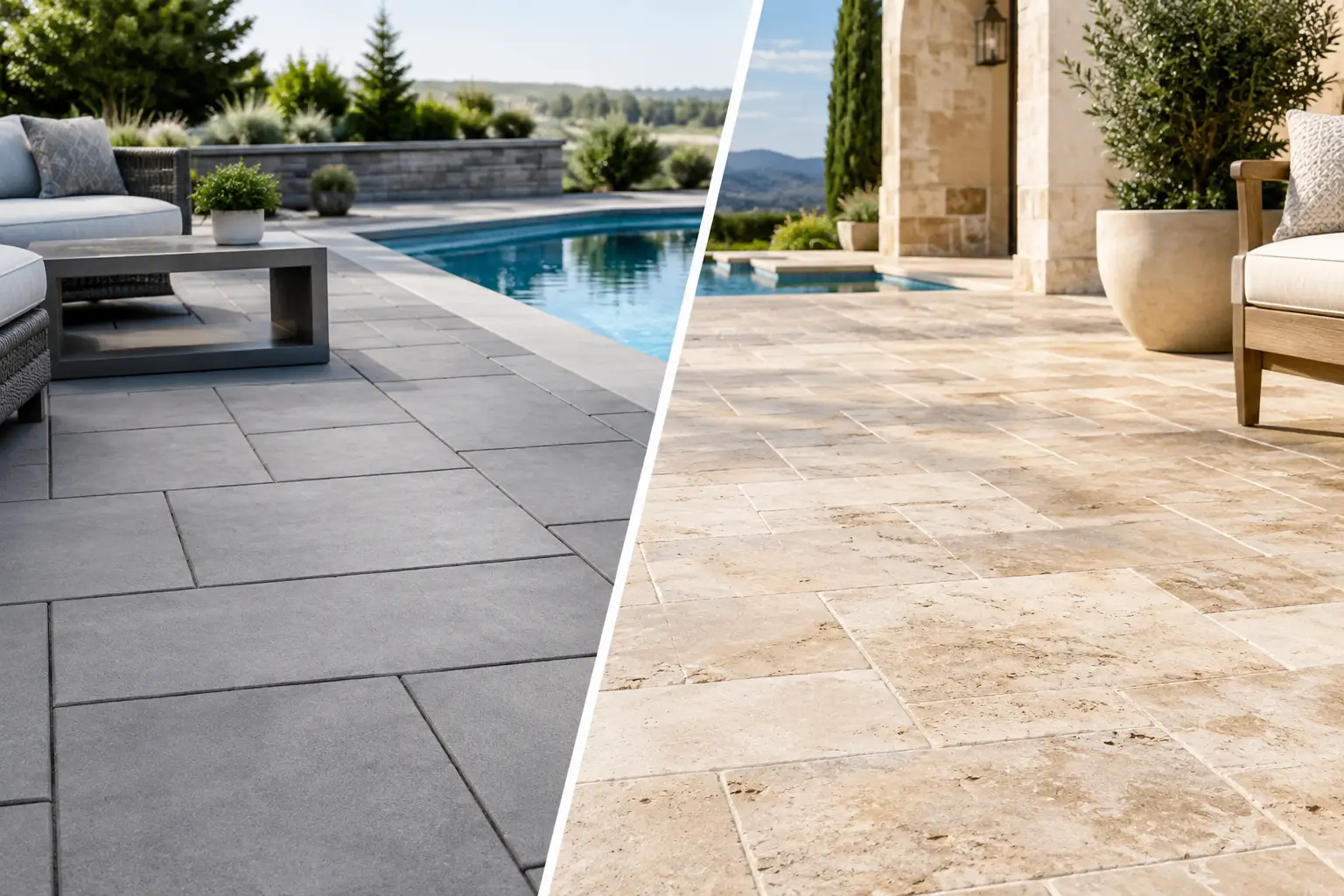
A patio material can change the way a backyard feels before the first chair is placed or the first dinner is served. In the concrete pavers vs travertine decision, both materials can create a polished, welcoming outdoor setting – but they achieve that result in very different ways. The better choice depends on how your family uses the space, how much sun it receives, the architecture of your home, and whether the patio is one beautiful feature or part of a larger outdoor retreat.
For homeowners creating a poolside escape, outdoor kitchen, fire feature, or covered entertaining area, the surface underfoot deserves as much consideration as the features above it. It sets the color palette, influences comfort on hot afternoons, and gives the entire design either a tailored architectural character or an organic, resort-inspired warmth.
Concrete Pavers vs Travertine at a Glance
Concrete pavers are manufactured units available in an exceptional range of shapes, sizes, colors, and textures. They can resemble natural stone, offer crisp contemporary lines, or create classic patterns that complement traditional homes. Their consistency makes them especially useful when a project calls for precise geometry, coordinated borders, or a custom driveway-to-patio transition.
Travertine is a natural stone formed from mineral deposits. Its tonal variation, small pits, and layered movement are part of its appeal. No two pieces are exactly alike, which gives a patio an established, relaxed elegance that works beautifully around pools and Mediterranean, Spanish, transitional, or resort-style homes.
Neither material is automatically the luxury choice. A thoughtfully designed paver terrace can feel highly tailored and sophisticated. A poorly selected travertine can feel disconnected from the home. The difference is in the overall composition: scale, color, layout, edge details, drainage, furnishings, and how the material carries through the full landscape.
The Look and Design Flexibility
If your vision includes clean lines, strong pattern work, or a broad selection of colors, concrete pavers offer more flexibility. Large-format pavers in soft gray, warm sand, or charcoal can anchor a contemporary outdoor kitchen. Smaller modules and contrasting soldier-course borders can add definition around dining terraces, walkways, and fire pits. Because pavers are manufactured, it is easier to achieve a controlled, repeatable look across a large project.
Travertine brings a different kind of visual value. Its variation is not a pattern applied at the factory; it is inherent in the stone. Cream, ivory, walnut, silver, and beige selections can create a layered surface that feels especially at home beside shimmering water, lush planting, and warm exterior lighting. Tumbled travertine has softened edges and a time-worn character, while more refined finishes can support a cleaner architectural direction.
For a cohesive transformation, consider the home first. A sharply modern residence may call for large, linear pavers with minimal joints. A home with stucco, warm roof tile, or classic arches may gain instant depth from travertine. There are exceptions, of course. The most compelling designs often mix materials intentionally, such as using travertine at a pool deck and coordinating pavers for a driveway or service walk.
Heat, Grip, and Poolside Comfort
In Sunbelt backyards, surface temperature is not a minor detail. It can determine whether guests linger barefoot around the pool or retreat indoors during the hottest part of the day.
Travertine is widely valued for its ability to remain comparatively comfortable underfoot in direct sun, particularly in lighter colors. Its natural porosity and density can help reduce heat retention compared with many dense hardscape surfaces. This makes it a popular choice for pool coping, tanning ledges, and expansive deck areas where bare feet are expected.
Concrete pavers vary more by product, color, finish, and local conditions. Light-colored pavers generally perform better in bright sun than darker selections, and certain textured or permeable options can be more comfortable and forgiving around water. Still, a dark, dense paver surface in full afternoon exposure may become noticeably hot.
Slip resistance matters, too. Tumbled travertine offers natural texture, while many concrete pavers are manufactured with textured surfaces designed for exterior use. Around a pool, the specific finish is more important than the material category alone. A design professional should also plan drainage carefully, because standing water can make any surface less inviting and less safe.
Durability and Repair Considerations
Both options can perform beautifully for years when they are properly installed on a well-prepared base. The key phrase is properly installed. An elegant material cannot compensate for poor excavation, weak base preparation, inadequate edge restraint, or drainage that sends water toward the house.
Concrete pavers have a practical advantage when repairs are needed. If a paver becomes stained, chipped, or disturbed by access to underground utilities, an individual unit can often be removed and replaced. This modular nature also makes pavers well suited to areas where future adjustments may be likely.
Travertine is durable natural stone, but it requires thoughtful sourcing, installation, and care. Its pores and natural voids are part of the material’s character, not necessarily defects. However, lower-quality stone, improper installation, or harsh cleaning products can create problems that distract from its beauty. A skilled installer understands how to select, lay, cut, and finish stone so that its variation feels intentional rather than random.
Freeze-thaw conditions deserve special attention for homes that experience occasional winter freezes. Installation methods, stone grade, drainage, and the condition of the underlying slab or base all affect performance. This is one reason a material decision should be made as part of the construction plan, not from a showroom sample alone.
Maintenance Is Different, Not Difficult
Homeowners sometimes assume travertine is high maintenance and concrete pavers are maintenance-free. Neither description is quite right.
Travertine benefits from routine sweeping, gentle cleaning, and resealing on a schedule appropriate to the stone, its finish, and how the space is used. Sealing can help reduce absorption from spills, sunscreen, leaves, and outdoor cooking. It is also wise to avoid acidic cleaners, which may etch natural stone.
Concrete pavers also need periodic care. Joints may need replenishment over time, especially after heavy rain or pressure washing. Efflorescence, a whitish mineral residue, can occasionally appear on concrete products. Cleaning methods should be selected carefully to protect the finish and joint material.
For either surface, the most effective maintenance strategy begins with design. Proper drainage, well-placed gutters, thoughtful planting, and a kitchen layout that keeps grease splatter away from the main traffic areas will preserve the patio better than any single cleaning product.
Cost: Think Beyond the Initial Square Foot
Material pricing matters, but it is only one part of the investment. Site access, demolition, grading, base work, drainage solutions, coping details, cuts, steps, retaining walls, and the complexity of the pattern can have a major effect on the finished project cost.
Concrete pavers often provide a broader range of price points. They can deliver a refined custom result while allowing flexibility in format and budget. Travertine typically carries a higher material and installation cost, particularly when selecting premium stone, detailed coping, or intricate layouts.
That said, a less expensive surface that does not support the way you want to live outdoors is not always the better value. If the goal is a pool-centered retreat where family and guests move barefoot between the water, lounge chairs, and an outdoor bar, travertine’s feel underfoot may justify the investment. If the project calls for a long paver driveway, defined courtyards, and a highly structured entertaining plan, concrete pavers may offer the design control that makes the entire property feel more complete.
When Concrete Pavers Are the Better Fit
Concrete pavers are often the stronger choice when architectural precision, pattern flexibility, and repairability lead the priorities. They work exceptionally well for driveways, front entries, walkways, and patios that need to coordinate with several hardscape zones. They are also a smart option for homeowners who want a custom color story without relying on the availability and variation of natural stone.
Choose pavers with care. The right size, joint spacing, border treatment, and finish can make the difference between a surface that feels ordinary and one that feels designed specifically for your home.
When Travertine Is the Better Fit
Travertine is often the standout choice for pool decks and hospitality-focused backyards where natural beauty and barefoot comfort are central to the experience. It has an easy ability to make a new outdoor space feel settled, sun-washed, and inviting. Around water features, stucco architecture, and lush planting, its subtle movement can create the kind of layered setting that encourages guests to stay long after sunset.
It is best for homeowners who appreciate natural variation rather than seeking an exact, uniform color match. Reviewing the actual stone selection and discussing expected variation before installation helps ensure the finished space reflects the intended mood.
Let the Whole Backyard Make the Decision
The most successful patios are not selected in isolation. They are designed around the pool, the view from inside the home, the cooking and dining zones, the paths guests will take, and the moments you want the backyard to hold. A material that looks beautiful in a sample can feel entirely different when it meets bright sun, water, landscaping, and a full evening of entertaining.
Whether your dream escape calls for the tailored versatility of concrete pavers or the natural, resort-style character of travertine, choose the surface that supports the life you want to create outdoors. When every element is planned as one environment, the patio becomes more than a finish underfoot – it becomes the foundation for gathering well.