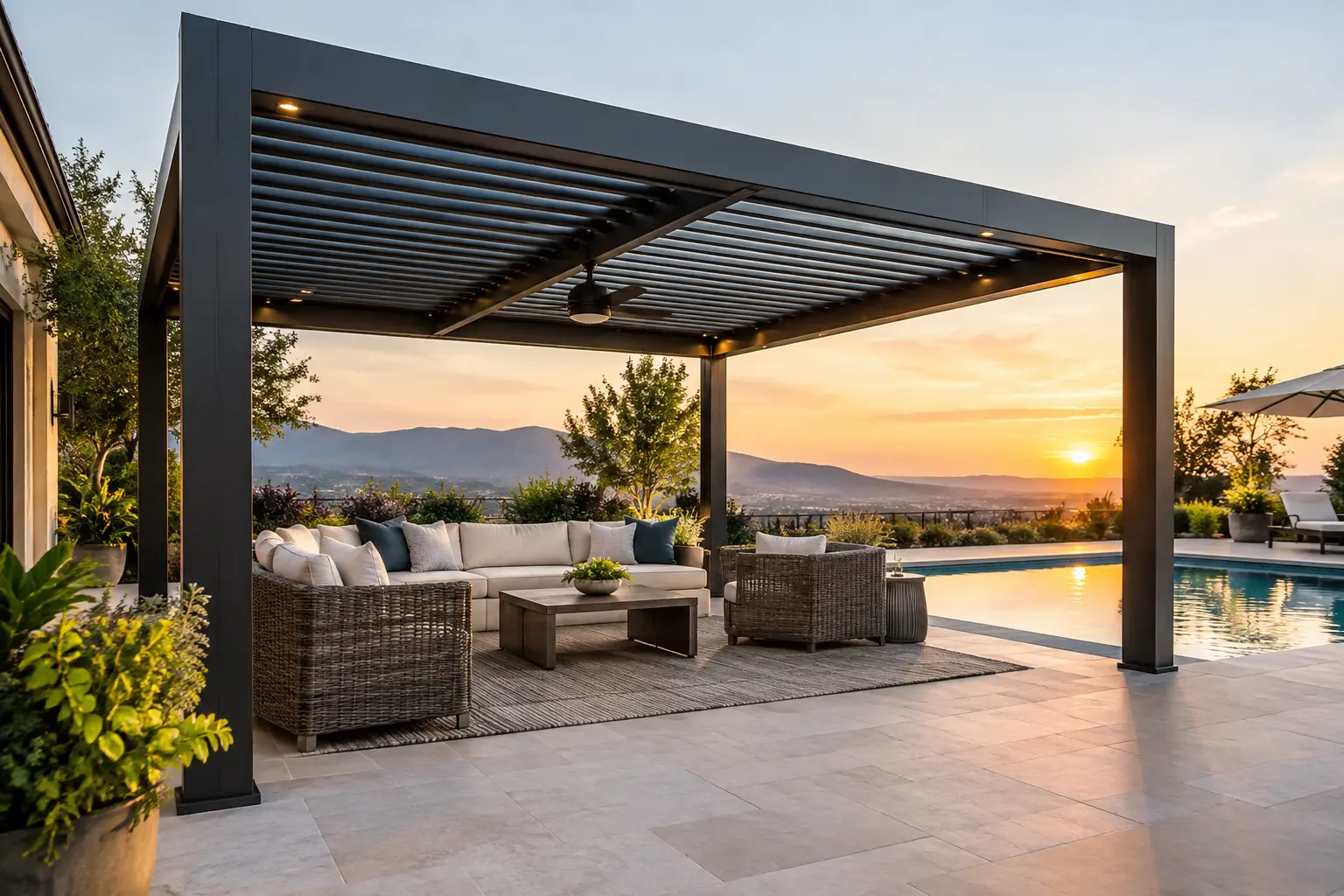
A beautiful patio can sit empty by noon if the sun is relentless. In the Sunbelt, shade is not an afterthought or a decorative accessory. It is what turns a striking outdoor space into a place where people actually linger. The top backyard shade structures do more than block glare and lower temperatures. They define gathering areas, frame views, and give a backyard the sense of permanence found at a favorite resort.
The right choice depends on how you live outside. A quiet lounge beside the pool needs a different kind of cover than an outdoor kitchen built for weekend crowds. Architecture, sun exposure, privacy, drainage, and the materials already present in the home all shape the answer. When shade is designed as part of the full landscape rather than added at the end, the result feels intentional from every angle.
Top Backyard Shade Structures Worth Considering
Pergolas for filtered light and architectural character
A custom pergola is one of the most versatile ways to give an open patio a sense of destination. Its overhead rafters cast patterned, filtered shade while preserving an airy connection to the sky. Pergolas work especially well over dining spaces, outdoor kitchens, fire features, and poolside lounges where homeowners want structure without creating a fully enclosed feeling.
Their real design strength is flexibility. The spacing and orientation of the rafters can be planned around the path of the sun, while retractable canopies, shade panels, drapery, or climbing plants can increase coverage. A cedar pergola can bring warmth to a natural landscape, while painted wood, steel, or aluminum may better complement a more contemporary home.
The trade-off is that a standard open-roof pergola does not offer full protection from a summer downpour or the strongest afternoon sun. It is best for homeowners who value light, architectural detail, and adaptable shade rather than a completely weatherproof ceiling.
Pavilions for a true outdoor room
For homeowners who want dependable overhead protection, a pavilion is often the centerpiece. With a solid roof supported by substantial posts, it creates an outdoor room that can support more ambitious features: a built-in kitchen, dining table, ceiling fans, lighting, television, fireplace, or comfortable lounge seating.
A pavilion can carry the visual language of the home into the backyard through roof pitch, trim profiles, columns, stone bases, and ceiling finishes. Done well, it looks less like an accessory and more like a natural extension of the property. It also gives the backyard a strong focal point, particularly when positioned to overlook a pool, water feature, or long garden view.
Because pavilions are more substantial, they require thoughtful planning. Footings, drainage, roof runoff, utility connections, and local permitting all matter. The investment is greater than an open pergola, but so is the year-round usefulness. For a family that hosts frequently or wants to use the patio through changing weather, that extra protection can be the difference between an attractive backyard and a favorite living space.
Covered patios for effortless connection to the home
A roof extension or custom-covered patio offers the smoothest transition from indoors to outdoors. It is a natural choice when the main goal is to enlarge the usable footprint of the home, especially beside a kitchen, living room, or primary suite. Stepping outside should feel easy, not like walking to a separate destination.
This approach is ideal for outdoor dining and entertaining because the space is close to indoor food prep, refrigeration, and restrooms. It can also be paired with large doors or pass-through windows to create a more connected hosting experience. Ceiling fans, recessed lighting, heaters, and integrated audio can make the area comfortable well after sunset.
The design challenge is avoiding a plain, dark addition. Ceiling materials, beam details, columns, landscape lighting, and a view into the yard help a covered patio feel open and elevated. The roofline should also be carefully integrated so it complements the home rather than competing with it.
Pool cabanas for private, resort-style comfort
A cabana brings an unmistakably luxurious note to a pool environment. It can provide a shaded retreat from the water, a changing area, a beverage station, a bathroom, or simply a beautifully appointed place to relax with a book. In larger backyards, it also balances the visual weight of a pool and gives guests a reason to move beyond the immediate patio.
Unlike a pavilion, which is often designed as an open gathering structure, a cabana can be more enclosed and more private. It may include solid side walls, curtains, louvered panels, or storage for towels and pool equipment. That makes it especially useful for households that spend long summer days outside and want the conveniences of the home close at hand.
A cabana needs enough room around it to feel gracious. It should not crowd the pool deck, obstruct a key sightline, or create an awkward traffic pattern between the house, water, and entertaining areas. Placement is everything, particularly when the goal is a polished resort atmosphere rather than another detached building.
Louvered roof systems for adjustable control
For homeowners who want shade on demand, a louvered roof system offers a more contemporary solution. Motorized louvers can rotate to manage sunlight and ventilation, then close when rain approaches. This level of control is appealing over dining terraces and outdoor kitchens, where a changing forecast should not interrupt the evening.
These systems have a clean, tailored appearance and work well with modern architecture. Many can incorporate integrated lighting, fans, screens, and drainage channels. They are not the right fit for every property, however. Their sleek look can feel out of place beside a highly traditional home unless the surrounding materials and details bridge the styles thoughtfully.
How to Choose the Right Shade Structure
Start with the sun, not the structure. Watch how light moves across the yard at breakfast, midday, and late afternoon. Western exposure often demands the most protection, while a space shaded by mature trees may benefit from a lighter overhead treatment. A designer can use those observations to orient rafters, set rooflines, and position walls or screens where they will make the greatest difference.
Next, define the experience you want to create. A covered dining area needs clearance for chairs, service paths, and conversation. An outdoor kitchen needs ventilation, task lighting, and protection for appliances. A pool lounge benefits from breezes and easy access to towels, while a fire feature may need a more open overhead condition for comfort and safety.
Materials should be selected for more than appearance. In hot, humid climates, durability and maintenance deserve equal attention. Natural wood offers richness but may require periodic care. Metal and composite materials can simplify maintenance, yet they need to be detailed carefully so the finished space still feels warm and tailored. Stone columns, pavers, ceiling finishes, and planting beds can tie the structure into the larger landscape.
Design Shade as Part of the Entire Backyard
The most successful shade structures are not isolated objects dropped onto a patio. They organize the whole outdoor environment. A pavilion may anchor a cooking and dining zone, with a pergola leading toward the pool and a fire pit placed just beyond the roofline for open-sky evenings. Low retaining walls, planting, lighting, and walkways then create a natural rhythm between each area.
This layered approach also lets a backyard serve different moods at once. Guests can gather under cover during a summer storm, children can move between the pool and a shaded lounge, and a couple can enjoy a quieter corner away from the main conversation. That variety is what makes a custom landscape feel generous and effortless.
At Beyond Backyard Living, shade structures are planned as part of a complete outdoor vision, alongside patios, pools, kitchens, fireplaces, and the details that make each space feel personal. The goal is not simply to add cover. It is to create a setting that welcomes people outside more often and keeps them there longer.
A thoughtfully designed roofline, pergola, or cabana can change the way a home is enjoyed on an ordinary Tuesday afternoon. Begin with the moments you want to have outside, then build the shade around them.