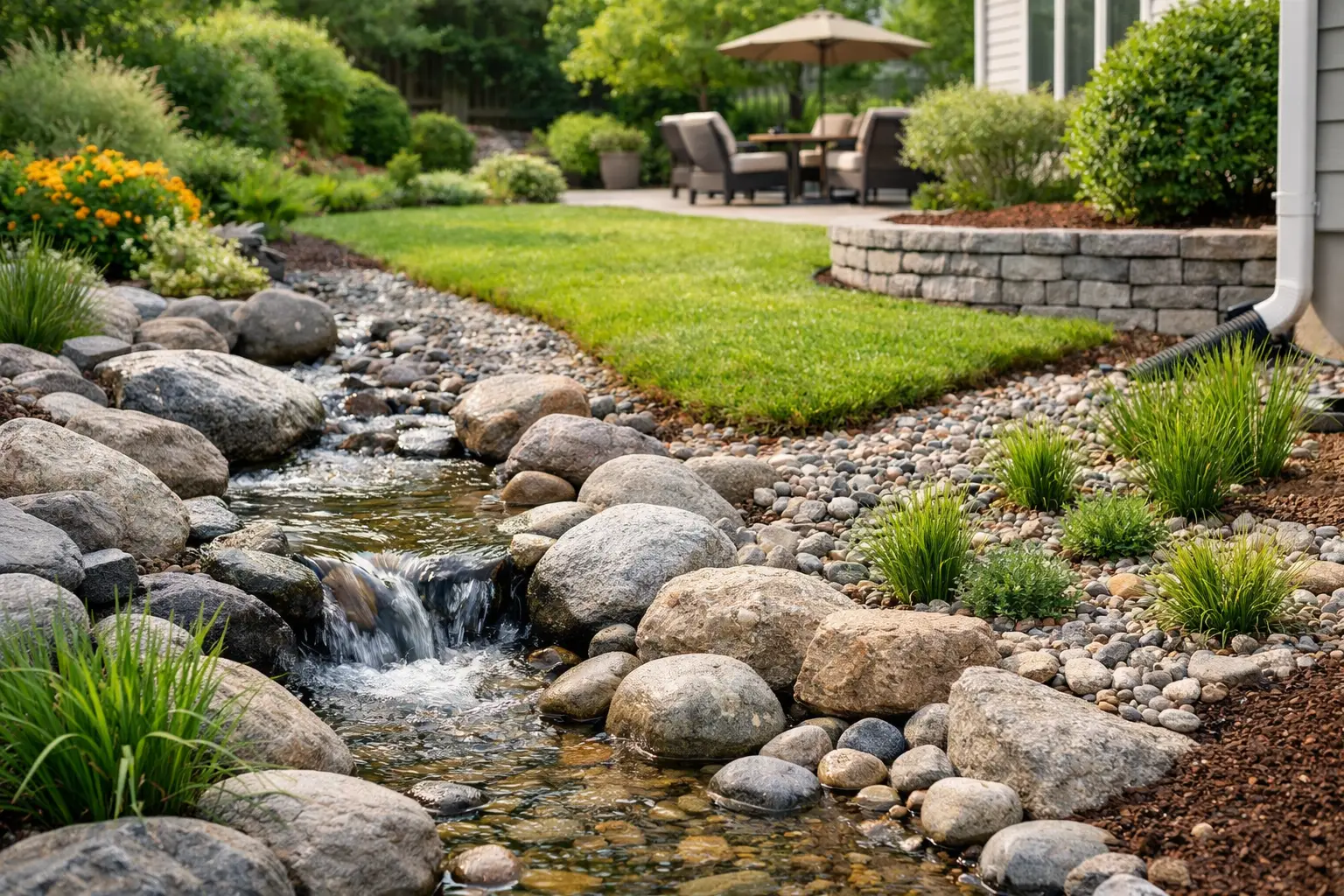
A beautiful backyard should feel like an escape after a summer storm, not a place where water collects beside the patio, saturates the lawn, and turns planting beds into mud. So, can landscape design improve drainage? Absolutely. When drainage is considered from the first design sketch, it can protect the home, preserve outdoor surfaces, and make the entire property more usable in every season.
For a high-end outdoor environment, drainage is not a separate utility problem to hide after construction. It is part of the architecture of the landscape. The grade beneath a paver terrace, the placement of a retaining wall, the selection of plant material, and the direction of roof runoff all influence how the property performs when rain arrives.
Why Backyard Drainage Deserves a Design-First Approach
Water always follows gravity, but an existing yard does not always send it where it belongs. A low spot near the foundation, a patio that pitches toward the house, or compacted soil beneath a lawn can create recurring problems that become more expensive over time. Standing water can stress turf and plant roots, stain hardscapes, encourage mosquitoes, and contribute to erosion. Near the home, persistent moisture can put unnecessary pressure on foundations and exterior finishes.
A thoughtful landscape plan looks beyond the puddle itself. It asks where the water originates, how quickly it moves across the property, where it can safely collect, and whether it can be absorbed into the ground rather than sent toward the house or a neighbor’s yard. That broader view is especially valuable when a project includes a pool, outdoor kitchen, pavilion, fire feature, or expansive patio. Each new surface changes the way water behaves.
The goal is not to make every drop disappear instantly. In many cases, the better outcome is to slow, direct, filter, and absorb runoff in a controlled way. The right solution depends on the lot, soil conditions, local rainfall patterns, existing structures, and the vision for the finished space.
Can Landscape Design Improve Drainage Without Sacrificing Beauty?
Yes, and the best drainage solutions often make the landscape feel more intentional. A gentle slope can create a graceful transition from a pool terrace to a lower garden. A retaining wall can shape a dramatic outdoor room while managing a change in elevation. A dry creek bed can become a natural focal point instead of a visible drainage channel.
The difference lies in planning. Drainage added as an afterthought often looks functional but disconnected: an exposed pipe, a patch of gravel, or a drain placed where it interrupts the layout. When it is woven into the design, the work supports the experience of the backyard. Guests notice the gathering spaces, materials, water features, and views. They do not notice the systems quietly keeping those spaces dry and durable.
Grading Creates the First Line of Defense
Proper grading is the foundation of effective drainage. The land should generally slope away from the home so surface water moves toward an appropriate collection or discharge area. Even subtle changes in elevation can make a meaningful difference, particularly around patios, walkways, and planting beds.
Grading is not simply about creating a steep slope. An aggressively pitched yard may control water, but it can feel awkward to use and difficult to furnish. In a luxury landscape, the grade should be engineered for performance while preserving comfortable transitions, clean sightlines, and usable outdoor rooms.
This is where a comprehensive design-build process matters. The team can coordinate the grading before hardscapes, structures, and landscape elements are installed, rather than trying to correct drainage around finished work later.
Surface Drains and Underground Systems Handle Concentrated Runoff
Some areas require more than grading alone. Downspouts, patio edges, pool decks, and the base of a slope can collect significant amounts of water during a heavy rain. Catch basins, channel drains, French drains, and underground piping can gather that runoff and move it to a suitable location.
A channel drain, for example, may be integrated along the edge of a patio or between a pool deck and a planting area. Its role is practical, but its placement can be discreet and precise. French drains are often useful where water is saturating soil below the surface, while catch basins can intercept water flowing across a paved area.
Not every property needs every system. Installing more drains than necessary can add cost without solving the underlying issue. A site assessment should identify whether the problem is surface runoff, groundwater, roof runoff, poor soil infiltration, or a combination of conditions.
Permeable Materials Let the Landscape Work Harder
Large areas of conventional concrete or tightly set paving can shed rainwater quickly. That may be acceptable when drainage infrastructure is designed to receive it, but it can overwhelm a poorly planned yard. Permeable pavers, gravel joints, and select porous materials can allow water to pass through the surface and into a properly prepared base below.
For driveways, walkways, and select patio areas, permeable pavers can offer a refined appearance while reducing surface runoff. They are not the ideal choice for every project. Soil type, anticipated traffic, maintenance expectations, and local conditions all matter. Still, they can be a valuable part of a layered drainage strategy, especially when paired with thoughtful grading and subsurface preparation.
Planting Can Support Better Drainage
Plants are not a replacement for sound grading or drainage infrastructure, but they can play an important supporting role. Deep-rooted trees, ornamental grasses, shrubs, and regionally appropriate perennials help stabilize soil, slow runoff, and improve the ground’s ability to absorb water over time.
A rain garden is one example. Positioned where runoff naturally gathers, it uses moisture-tolerant plants and amended soil to temporarily hold and filter water. Done well, it reads as a lush garden destination rather than a wet spot with plants around it. It can bring seasonal color, texture, and pollinator interest to an area that once felt like a problem.
Plant selection should match the microclimate. A bed at the base of a slope may need plants that tolerate periodic moisture, while a raised area near a wall may need varieties that prefer fast-draining soil. The most polished landscapes use these conditions creatively instead of fighting them.
Retaining Walls and Drainage Must Work Together
Retaining walls are often chosen to create level space for a patio, pool, lawn, or outdoor kitchen on a sloped property. They can transform a challenging yard into a series of purposeful terraces. But they must also be built with drainage behind and beneath them.
Without proper drainage, water can build up behind a retaining wall and create pressure that compromises its performance. A professionally designed wall typically incorporates suitable base preparation, drainage stone, perforated pipe, and weep provisions where appropriate. These components are largely out of sight, yet they are essential to the wall’s longevity.
This is one reason landscaping and hardscape construction should be considered together. The wall, the grade, the patio, and the surrounding planting beds are not separate decisions. They are one connected system.
When a Drainage Fix Requires More Than Landscaping
Landscape design can resolve many drainage concerns, but there are times when a broader investigation is necessary. Water entering a basement, recurring foundation moisture, failing gutters, damaged underground utilities, or drainage disputes at a property line may require input from a civil engineer, plumber, or other specialist.
Local regulations may also dictate where runoff can be directed, particularly in communities with stormwater requirements or tightly spaced homes. A responsible plan should never shift a water problem from one property to another. The right solution protects your investment while respecting the surrounding site.
Before construction begins, a professional team should evaluate elevations, roof drainage, soil, existing utilities, and the intended use of the space. This early work is not glamorous, but it is what allows the finished backyard to feel effortless.
Design a Backyard That Performs as Beautifully as It Looks
The most memorable outdoor spaces are built for real life: poolside afternoons, fireside conversations, family dinners, and the quiet moments in between. None of that feels luxurious when guests are stepping around puddles or a patio stays slick long after the rain stops.
At Beyond Backyard Living, drainage is considered as part of the larger vision for a property, from the first layout to the final planting details. A well-designed system gives your landscape the freedom to be more than beautiful. It gives you a backyard ready to welcome people, weather the elements, and keep delivering the experience you imagined.